






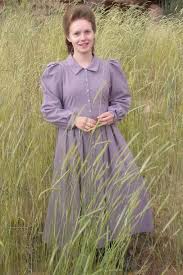
Polygamy is when a good friend’s husband dies, and instead of throwing her to the wolves, you take her in and make her a functioning part of your family.
Polygamy is when your wife is social, and loves her friends. It’s when they choose to live life together, and share their lives with each other, and with their husband.
It’s the opposite of isolating her, and killing her inner soul with loneliness.
Polygamy is when your wife has a best friend, and she asks to bring her into the marriage. Childhood friends do not have to go on to different lives, they can make a life together.
Polygamy is when a man has grown into such a good leader that his family needs to grow along with him. Marriage is about love, but it’s also about managing resources. If managing has grown so complicated that it’s impossible, then it may be time to look for another wife.
Polygamy is about children. It’s when a family make the decision to add a second wife to prevent children from being put in daycare or public school. Many times this is the only option to keep the kids home, and safe.
Definitions change. There are many reasons.
Cultural drift means that the culture that created the word has moved on, and the word taken on new meanings. For instance, a fag was once a cigarette, but evolved to signify a gay man, and later, was dropped from use completely and relegated to the category of “Slur.” Other words are the same, like punk once only meant rotten wood, and cad was once a rotten person, but now signifies software.
Language Drift is similar to this. It’s when the language itself has moved so far the word has completely lost it’s original meaning and rendered archaic in form or useage. Words like, “Teched,” meaning someone who is devil touched, or insane… and, “Overmorrow,” which is simply day after tomorrow. Words that have lost form, like, “confront,” are interesting to study. People once said, “That don’t confront me much,” which means, “Not my problem.”
Other words have had their definitions evolved, often wrongly, by individuals or groups with an agenda. Husband, Wife, and Marriage are all words that have lost their initial meanings, and now carry definitions that would have confused anyone who spoke those words years ago. Below is a list of words that have been changed, or lost definitions, or had so much cultural drift that the way we see the concept is far from what it once was.
To understand what I am doing, and what the purpose of this website is, you will have to allow your mind to go back to when language was more pure, more visceral. You’ll need to correct your inner definitions, because that is what has been done to destroy us… changing the meaning of life, by making us not understand history properly. What I mean by that is that when we look back, we look back with the lens of today, not the lens of yesterday. The concepts we see, we internally translate into today’s framework, and miss very important lessons that history can teach us.
Husband:
(hŭz'bǝnd)
adj. A manager or steward, as of a household or stable.2.
A prudent and thrifty manager. He's
a great husband of the resources you gave him.3.
To spend and use economically. She
husbanded the family resources wisely.
4.
To budget or conserve. Husband
ones energy.
Husband was never a gender specific word. It gained that definition only because men were generally the owners and managers of land but women could and did own land as well. , so the word is and does apply to women, making it gender neutral. A woman can be the husband of animals, or the husband of her own resources, and yes, she can husband land. It was much later when the word was used for a married man, and that usage is incorrect even if common. Using the term in reference to a married man, is to adopt an alternative definition that means, “Owner of woman.”
Husband is a combination of two Old Norse words, “hus,” and, “bondi.” Hus means House, and bondi is occupier or tiller of the soil.” It could be the general equivalent of Landowner in English but the definition of the two words hus and bondi represent a deeper concept than what we think of in English.
Ancient people didn’t make deeds. They settled in an area and defined an area they were going to manage. Sometimes this was a rock wall and you can still see those in the country. Sometimes it was a fence, or other barrier like hedges. If he could tend the land, he could keep it, but if he was unable to do so, then others could take the land from him. According to many early laws, he had to physically occupy and work the land to be considered it’s husband.
Because of this, the word husband became attributed to men. The word also changed from an adjective, (He husbanded the land well), to becoming a noun. (He’s a good husband to his wife.) Even today when we introduce someone as a married couple, This is John, the husband, and his wife, Sherry. What you’re really saying is, “This is John and he takes care of his farm and land by himself, and Sherry, his woman.”
By stripping the meanings of a word and applying a new meaning, it removes the power of the word, and weakens it’s concept. It also removes the separation between different roles in the family, and mashes things up in a way that causes division and strife.
The husbands duties include managing the land, planting or harvesting crops, and obtaining and utilizing resources including the land, the people he employs or is married to, for the specific purpose of establishing his family, empowering them, and helping them become as much as they can be, or want to be.
A woman engaged in Animal husbandry takes care of the general welfare of the animals, arranges for them to be fed, watered, groomed, and shod. They make the animals ready for the work they will need to do, and a good husband has strong, sleek, healthy animals, both physically and mentally. The Leader will direct how the animals are used, and the Manager will arrange for the actual labor in getting them to the point, as well as general care in the day to day operations of the farm.
Wife = Woman. Female.
Wife was originally wif. Wif was used similarly to the English word, “Female.” The word Wif had many modifiers, and could be, “Wifman,” which would be female servant, or, “Alewife,” as a barmaid or tavern keeper. Housewife or Huswif was not a married woman, but a female servant in it’s original meaning.
The word “Wive,” meant to marry a woman. Wiving was the act of taking a wife and it literally means, “man taking woman.”
American English uses the word, “Wife,” in a way that was never intended. As with many English words, as the American Continent was settled, the settlers brought many languages with them, and those languages were condensed to new meanings definitions and roles. In some cases Language Drift and Definition Drift is so dramatic that the original word was lost and a new similar sounding words evolved to replace it, but carrying a completely different meaning. That appears to be the case for Wife. To reiterate, the word wif or wife, simply means, “Female,” not a married woman. Why this is important will come later, when we start talking about the three forms of marriage.
Polygamy noun [poly-many + Gamos-marriage] is the act of more than two people associating themselves in a domestic, permanent living situation with the intent to work as a team, and potentially raise children as a family. Polygany is broken down into three accepted categories;
Polygyny, the act of two more more women choosing to marry one man.
Polyandry, the act of two ore more men choosing to marry one woman.
Polyamory, the act of more than one sex choosing to marry as a group.
Serial Polygamy, the act of taking a mate, then abandoning the individual(s) to take another.
The origins of the word appear to be from around 1590AD Rome as the word is Latin and has Greek counterparts.
Etymonline states, “marriage with more than one spouse,” 1590s, from Late Latin polygamia, from Late Greek polygamia “polygamy,” from polygamos “often married,” from polys “many” (see poly-) + gamos “marriage” (see gamete). The word is not etymologically restricted to marriage of one man and multiple women (technically polygyny), but often used as if it were. Related: Polygamist; polygamize.”
As the word is relatively new, originating from the Catholic Church on or around 1590, there are no really old examples.
Polygyny: (pəˈlɪ gi ni) n. The condition of having had more than one wife or female mate.
Poly + (greek) gunē
Polygyny seems to have been coined around 1790 and is Greek in origin. According to Etymonline, “1780, “condition of having many wives, marriage or cohabitation of one man with more than one woman at the same time,” from Greek polygynēs “having many wives,” from polys “many” (see poly-) + gynē “woman, wife” (from PIE root *gwen- “woman”).” The word has roots in Hebrew gynē which is defined as, “a woman of any age, whether a virgin, or married, or a widow,” and Poly a Greek/Latin word. I found it interesting that if you try to recreate this word in Hebrew, the translation is, “Noisy confusing women.”
Marrying many women doesn’t appear in literature or fiction as a negative until the 1500’s. While the Bible did say not to multiply wives, the term used “rāḇâ” or, “רָבָה” means to greatly expand or become numerous… carrying the idea of a great multitude. The Bible seems to have no issue with someone taking two or three women as wives, sometimes more as in the case of David. In some cases polygyny was commanded.
From the very oldest records we have as a species, polygyny has been a tool to protect women. The very first example of the practice was Lamech.
“And Lamech said unto his wives, Adah and Zillah, Hear my voice; ye wives of Lamech, hearken unto my speech: for I have slain a man to my wounding, and a young man to my hurt.” This is a bit anbigupus, but it can easily be translated, “Hear what I’m saying ladies, pay attention. I will kill anyone who hurts me, even if they are young.” He was vowing to protect himself from harm… and this works with the times as it was a bad time just before God caused the Flood.
In the USA, Polygyny was all but eradicated by the Protestant Church

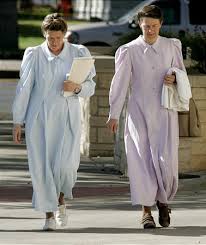
in the name of a doctrine that can’t be supported by the Bible but has origins in the early Catholic Church. It appears that in the Reformation, Martin Luther attempted to restore polygyny, but failed. Not long after the reformation, a group calling themselves Anabaptists settled in the area known as Munster Germany, and set up a version of a utopia. They adopted polygyny, and grew in size rather quickly. Today, you can see the results of this in the cages hanging on the steeple of the Saint Lambert’s church. Yes, they hung the leaders of the rebellion there to die. The rebellion was against Catholic and Lutheran groups, and was suppressed brutally. After the rebellion was put down and the people killed, Menno Simons who was not there at the time of the attack, took control and changed the name of the group to Mennonites. Today we know then as Baptists, Mennonites, and Amish.
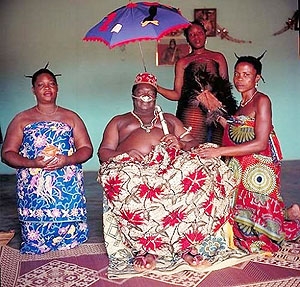
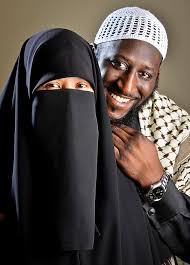
A number of groups practice polygyny worldwide. In some nations like Africa, efforts have been put forth to erase the marriage practice, and the result has been women unable to marry and resorting to uncomfortable or dangerous work. In the USA, Polygyny is alive but struggling. In the early 2000’s there was a surge in the practice, and there were approximately 60,000 poly families. This ended when one poly man murdered his wife, and brought negative press down on the group, causing police involvement in the movement, (It’s a felony in the USA) and the members generally went into hiding.
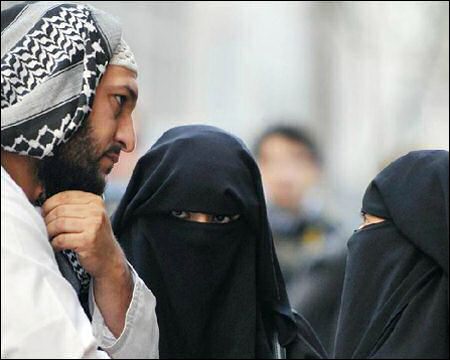
Today there are a number of groups, mostly religious, who have revived the practice and are making real efforts to bring it back in a positive and beneficial way.
Leadership is the act of leading. As opposed to management, leadership is the act/art of setting long and short terms goals, then moving along a path to achieve those goals. Leadership is movement.
The word is from the Greek word, “hēgemonia,“ leading the way, going first. The original meaning of the word was to track down or trace, make a path.
In the last few centuries, the terms leader and manager have become synonymous even though they carry vastly different meanings. While a leader will set the path of a household, the manager manages resources within the household. I personally see this as representative of the damage done to marriage by being unbalanced. Meanings have meshed into concepts that no longer carry the original intent, and this is mirrored in how people attempt to engage in the roles that make marriage work.
Manager is a person who conducts business.
Websters says “A person who conducts business with economy and frugality; a good husband.” The word originally was about the dare of control of horses. Synonymous with the English word, “Horsemanship.” While Husbandry was to care for and feed, manage animals, a Manager was the one who would train, and take a horse in hand, thus “Manus,” which means hand in Old French.
The balance is broken, the world is off kilter, and we are just now seeing enough of the damage to start correcting it. I am seeking writers, men and women knowledgeable in history to help me flesh out this website, write articles, and eventually become a part of the solution. If you’re interested, please, send me an email on my contact page.
Subscribe to my weekly newsletter. I don’t send any spam email ever!